how 3D printing is used in exhibit fabrication
introduction
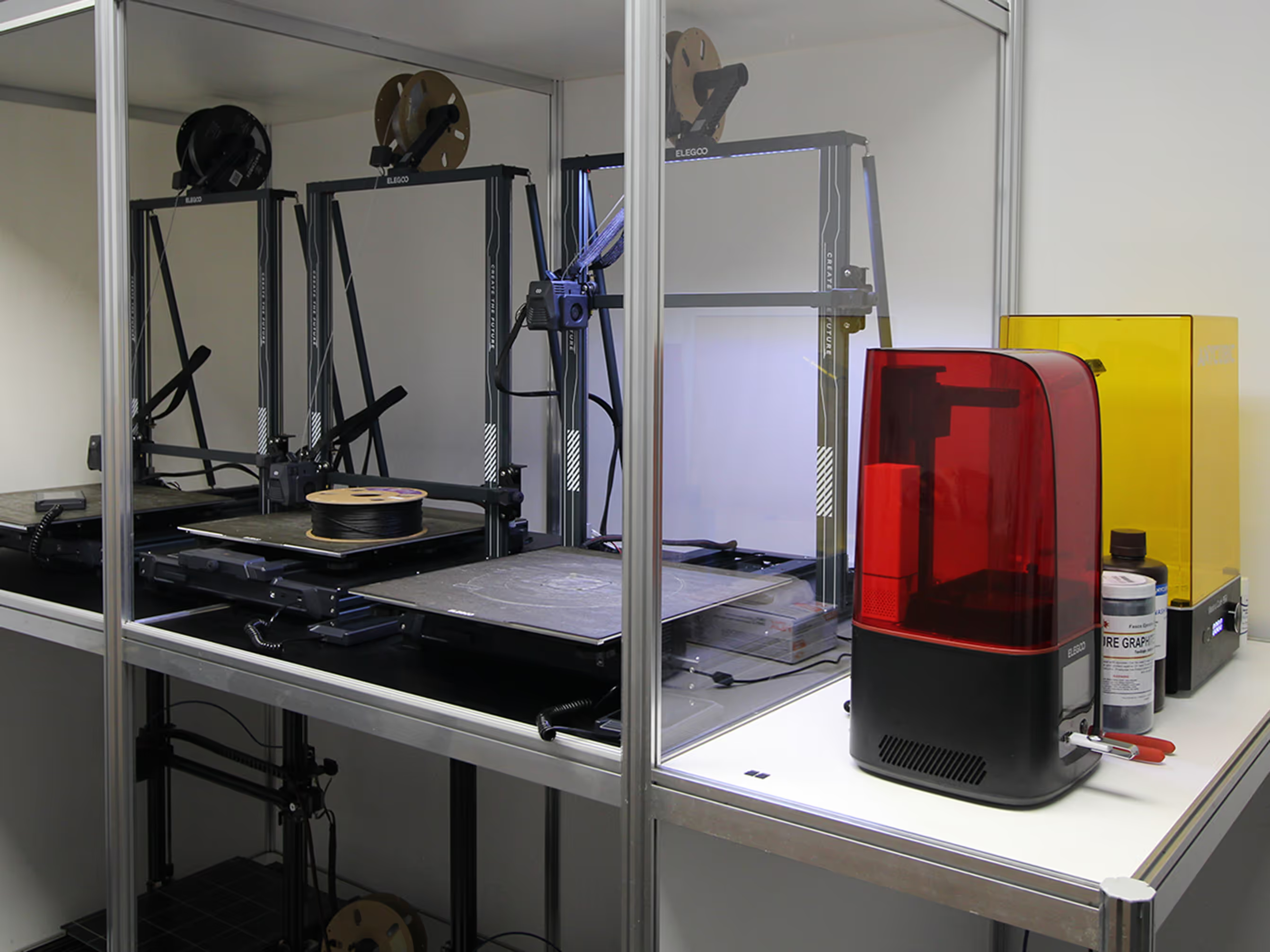
Back in 2020, our Managing Partner David casually mentioned that buying a 3D printer might be cheaper than sourcing and shipping the custom connectors needed for one of our experiential marketing builds.Fast forward to today, and now we’ have over ten — and they've logged thousands of hours of print time (and counting).
Since then, 3D printing has become a daily part of our workflow, allowing us to push the boundaries of custom fabrication for trade shows and experiential activations.
what is 3D printing?
3D printing — also called additive manufacturing — is the process of building a three-dimensional object from a digital file by layering materials like plastic, resin, or metal. It’s the opposite of traditional “subtractive” methods, where material is cut or carved away to form an object.
The technology has come a long way since the 1980s when Chuck Hull invented the first SLA (stereolithography) 3D printer, and the STL file format we still use today.
Today, 3D printing is used by major companies like GE, Boeing, Google, and Invisalign. We’re not building jet engines or three-story houses (yet), but this tech has huge implications for the trade show and exhibit industry.
how the 3D printing process works
Every print starts with a digital 3D model created in CAD software like SolidWorks or Rhino 3D. Once the model is finalized, it's exported as an STL file. From there, it’s imported into slicing software (we use UltiMaker Cura), which converts the model into thin layers and generates a print-ready file called G-code.
3D printing process and materials
The actual print process can take hours or even days, depending on size and complexity. While this may sound slow, it’s significantly faster and more cost-effective than outsourcing fabrication, especially for custom parts.
At Exhibit Studio, we use two types of 3D printers that are mentioned below.
FDM (Fuel Deposition Modelling) printers
These printers melt a plastic filament and deposit it layer by layer, building the object from the ground up. A cooling fan helps each layer solidify quickly before the next one is added.
We use FDM printers for functional display parts, prototypes, and interactive components. Here are some of the materials we work with:
- PLA: biodegradable, easy to print, ideal for general applications.
- TPU: flexible and durable; great for shock-absorbent parts.
- PETG: tough and clear with thermal resistance.
- ABS: impact-resistant and strong.
- Nylon: durable and slightly flexible; good for wear-and-tear items.
SLA printers (stereolithography)
SLA printers use UV light to cure liquid resin one layer at a time. This technique doesn’t rely on heat and is best for high-detail, small-scale prints like models or components that require a smooth surface finish.
We use SLA printers for scaled-down product representations and intricate pieces where precision is key.
how we use 3D printing for exhibit fabrication
While we’re not printing entire 10x20 exhibits, our 3D printers allow us to build:
- Custom lighting caps and fixtures.
- Connectors and mounting components.
- Interactive models for displays.
- Replacement parts for discontinued systems.
- Scaled representations of client products.
This capability eliminates the need to outsource custom parts or rely on off-the-shelf components that don’t quite fit. It speeds up our timelines, reduces shipping costs, and allows us to take on design challenges with tailored precision.
real world example
For an outdoor modular sign project, we printed custom solar light caps that could house electrical wiring while standing up to rain and wind. That level of customization would have been costly without in-house 3D printing.
final thoughts
3D printing allows us to create one-of-a-kind solutions that help achieve unique display goals. It gives our production team more control, helps reduce waste, and gives us the flexibility to experiment with design — all of which are key to delivering high-impact, cost-effective results.
Sign up for more insights like this!

Let’s talk ideas