Using Laser Cutting and Engraving in Custom Exhibit Fabrication
introduction
Ever wonder how stainless steel logos are engraved on your favourite coffee tumbler? Or how clean-cut 3D letters appear perfectly mounted on a vehicle or sign? The answer is laser precision — quite literally.
Let's break down what a flatbed laser machine does, how it compares to other fabrication methods, and how it can be used to elevate signage, exhibits, and other creative displays.
what does a flatbed laser machine do?
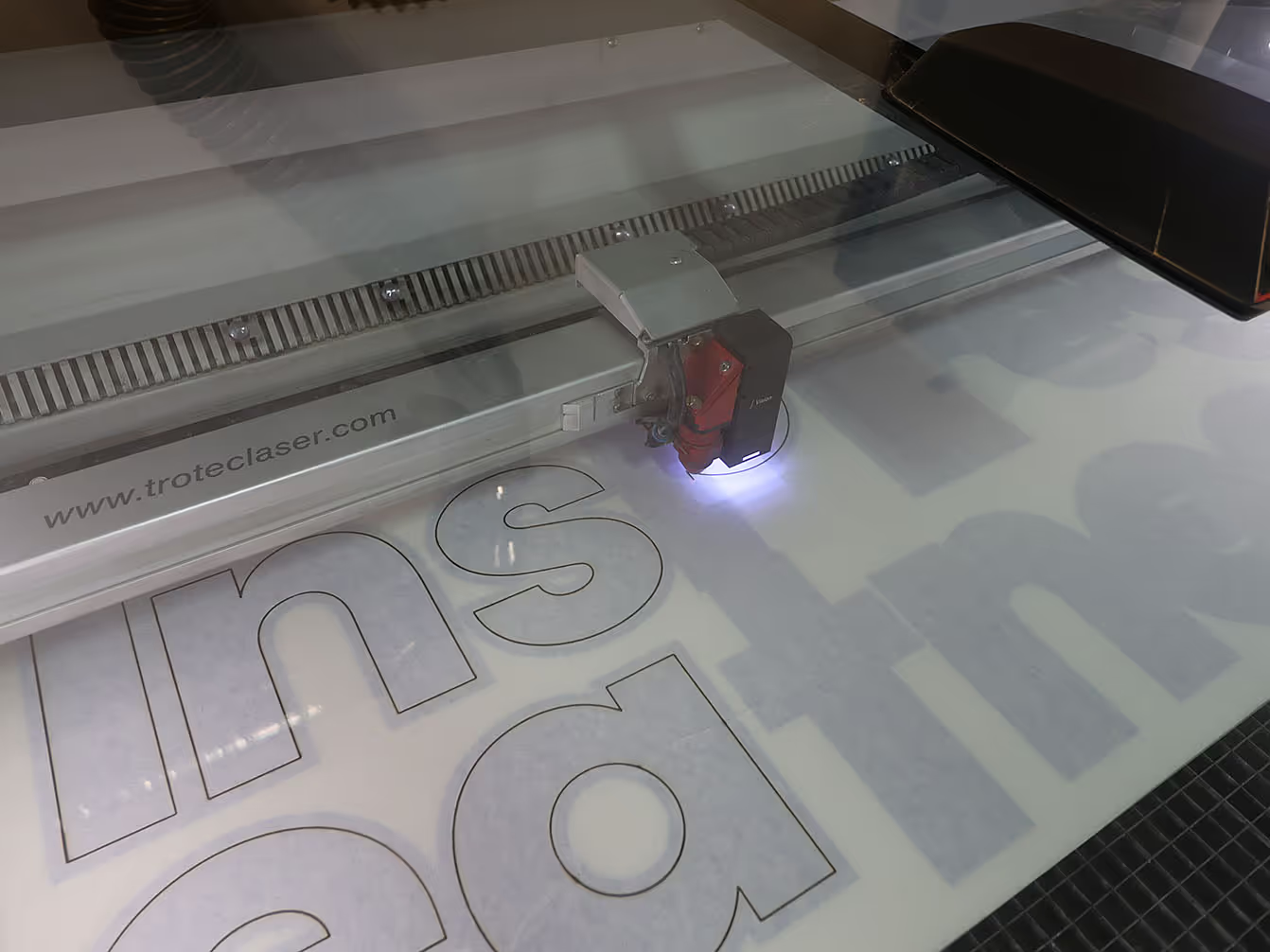
While the word “laser” might conjure up imagery from a sci fi movie, in a fabrication context it’s a highly practical tool. A flatbed CO₂ laser can cut, mark, engrave, and etch a wide range of materials with precision. Each process serves a different function depending on the type of project.
laser cutting
Separates the material, and is ideal for intricate shapes and sharp edges on materials like acrylic, wood, or rubber.
laser engraving
Uses high heat to vaporize and remove material, creating a recessed design to create depth. You’ll see this on items like stainless steel mugs — where the coloured coating is engraved away to reveal the stainless steel underneath.
laser etching
A type of engraving where a marking agent is applied to the surface, then activated with heat to leave a design. This process deposits material instead of removing it — ideal for stainless steel tags or branding elements.
laser marking
Alters the appearance of the material without cutting into it, resulting in permanent discolouration or contrast (but no physical indent). This is often used for serial numbers, barcodes, or subtle branding.
All of these laser processes are frequently used in product design, architectural signage, promotional items, and with fabricating graphics elements.
what is the difference between using a laser and CNC router?
A CNC router — short for Computer Numerical Control router — is designed for cutting, carving, and shaping large-scale or structural components. Guided by digital design files, a CNC router uses rotating cutting tools to remove material with precision and consistency.
Both the router and the flatbed laser are digitally controlled machines capable of highly detailed work, but each serves a different purpose. The CNC router is ideal for producing thicker parts and larger components, making it a go-to for exhibit structures, cabinetry, and dimensional signage. It works especially well with materials like wood, foam, plastics, and composite panels.
The flatbed laser is built for small-format, high-precision applications. It can achieve fine cuts and engravings down to a 2-point font and produces clean, polished edges without sanding or post-processing. It’s well suited for detailed signage, intricate patterns, and engraving on materials such as acrylic, plastic, glass, and leather.
common flatbed laser applications for custom displays:
Our flatbed laser has become a serious part of our production workflow, especially for creating signage and other exhibit components.
- Logos, letters, and signs: cut from acrylic, wood, or MDF — often layered or backlit for trade show displays.
- Branded merchandise: permanent engraving on stainless steel, aluminum, or powder-coated objects.
- Templates and jigs: used during production to maintain consistency and speed during complex assemblies.
- Textured display finishes or patterns: applied to materials like plywood or MDF for visual depth or branded details.
- Prototyping: when rapid development or testing is needed before finalizing materials or form.
materials that flatbed lasers can process
Flatbed laser machines can handle a wide range of materials commonly used for exhibits.
- Acrylic
- Wood and MDF
- Rubber and foam
- Glass
- Stainless steel and aluminum
- Painted or coated materials
Each material reacts differently to laser cutting. For instance, some plastics produce clean, smooth edges, while others may need adjusted power settings to avoid warping or burn marks.
final thoughts
Flatbed laser machines are an integral addition to exhibit fabrication, adding precision and versatility to a wide range of projects. From detailed signage and engraved graphics to fine finishing on custom display elements, it allows for clean, consistent results across different materials.
The value of the laser isn’t just in its technology — but how it enhances creativity, accuracy, and the overall quality of what we build.
Sign up for more insights like this!

Let’s talk ideas